A wire mesh deck can look sturdy while hiding its weakest point: the distance between its supports. That gap matters. So do wire diameter, channel design, beam compatibility, and whether cartons, pallets, or concentrated loads rest on the surface. There is no single capacity that applies to every deck. A rating must match the specific product and installation.
For “what are the weight capacity ratings for wire mesh decks,” this guide uses the Rack Manufacturers Institute’s ANSI MH16.1 rack-design standard and OSHA’s 29 CFR 1910.22(d)(1), which requires applicable floor-load limits to be marked. These references help frame safe storage, but they do not establish one universal wire-deck rating. The manufacturer’s load table and test conditions remain essential. RMI guidance emphasizes a practical point: “Use the capacity assigned to the installed rack configuration.” Treat that as a reminder, not a substitute for a product-specific rating. A deck rated under one span or loading pattern may not perform the same way under another.
Look for stated uniform-load capacity, support spacing, and any deflection or installation limits. Then compare those details with the actual rack. A pallet’s weight is not always spread evenly; its feet can press into a few wires. Small detail. Big consequence. Published figures can also be difficult to compare when test methods differ. This introduction sets up the ratings, variables, and verification steps ahead—while acknowledging that a label alone cannot resolve every real-world loading question.
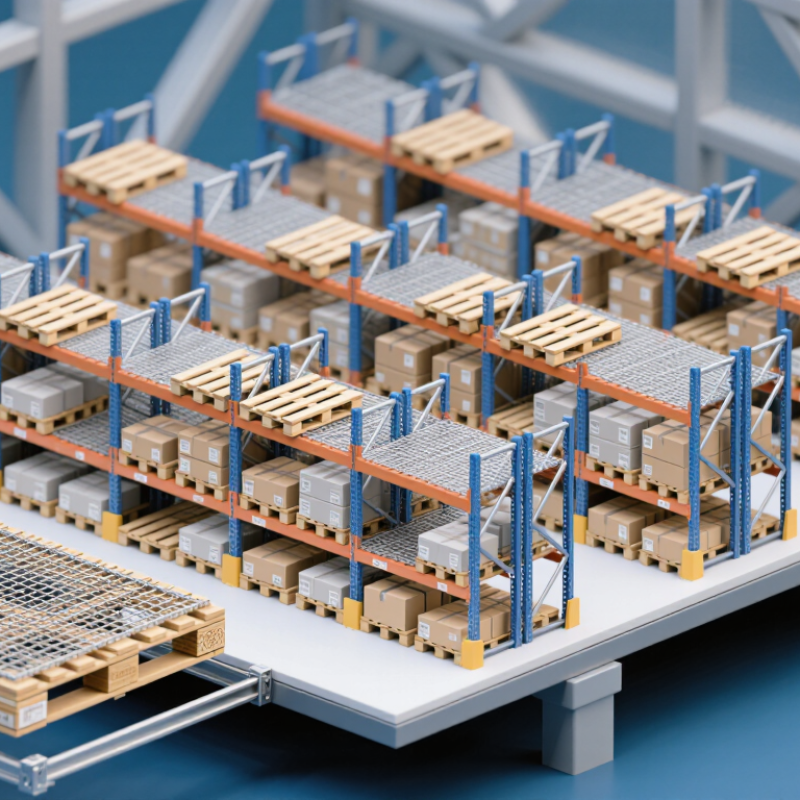
Wire mesh deck capacity depends on how weight reaches the rack. A uniformly distributed load spreads weight across the deck surface, like cartons arranged evenly from front to back. A concentrated load places weight in a smaller area, such as one heavy machine foot or a narrow pallet runner. These loading patterns create different stresses, so one capacity figure cannot safely describe every use.
That distinction matters. A deck rated for a distributed load may not support the same total weight concentrated near its center. Mesh wire spacing, deck depth, support locations, beam condition, and load placement all affect performance. Check the rating documentation for the exact deck model and confirm whether the stated capacity assumes evenly spread weight or a specific concentrated-load test. Do not infer a safe rating from wire thickness alone.
Inspect the installed setup, too. The deck should sit correctly on its supports, with no bent wires, loose connectors, or visible damage. Keep pallets centered and avoid letting narrow runners rest between supporting beams. Real warehouse loads are rarely perfectly even; that detail is easy to overlook. When the load shape or placement differs from the documented test, ask a qualified rack professional to verify the application before storing it.
Understanding Uniformly Distributed and Concentrated Loads
Uniformly distributed load (UDL) is spread across the deck surface; a concentrated load is applied at one location. The chart shows an illustrative example for a 46-inch-wide deck panel, not verified product ratings. Actual capacity depends on deck construction, support span, beam conditions, and load placement. Confirm ratings with the applicable manufacturer load table and qualified engineer before use.
Wire mesh deck ratings make sense only when read with their test conditions. ANSI MH16.1 addresses the design, testing, and use of steel storage racks; it does not set one universal capacity for every deck. The published rating should identify the deck configuration and support spacing. Check whether the stated load is uniformly distributed across the deck.
Not a universal number.
Picture a pallet resting on two beams, with its weight spread across the mesh. A narrow container or concentrated load creates a different demand. That matters. Compare the deck rating with the actual beam spacing, load pattern, and rack configuration, rather than relying on a single number in a catalog. Rack beam capacity is a separate limit, and the lower applicable rating governs.
Look closely at the support wires, welds, and bearing edges. A bent panel or loose weld can change how loads transfer, even if the label remains readable. A quick visual check helps, but it is not proof.
Confirm that the rating comes from documented testing aligned with the relevant design principles, and ask for clarification when test conditions are missing. I would not treat an assumed safety margin as a substitute for verified data. For unusual loads or altered racks, have a qualified rack professional review the setup before use.
A 2026 wire mesh deck comparison is useful only when the ratings share the same test conditions. Start with deck dimensions, then check the beam span and support layout. A 36-by-46-inch panel on two beams cannot be compared directly with the same panel supported on four sides. The extra supports change how loads travel through the wires.
ANSI MH26.2-2017 sets out test and evaluation methods for welded-wire rack decking. Use its framework when reviewing manufacturer data, and confirm whether the published rating is for a uniformly distributed load or a concentrated load. Those are not interchangeable. Check the stated beam spacing, deck orientation, and any required safety supports. Small print matters.
Compare the actual rating tables, not just product dimensions. Record the rated capacity for each deck size and span, along with support conditions and test basis. A higher number may reflect a shorter span, not stronger construction. It is easy to miss that. OSHA’s 29 CFR 1910.176(b) requires stored materials to remain stable and secure against sliding or collapse; a deck rating alone does not establish safe rack capacity. Measure the installed beam spacing, too. A tape measure can expose a mismatch that a tidy spreadsheet misses. Manufacturers’ ratings should be verified for the specific configuration before loading.
Wire mesh deck ratings are not determined by weight alone. A evenly spread carton load behaves differently from a narrow steel die or a single heavy drum. Concentrated loads press on fewer wires and welds, even when the total weight seems modest. Keep the load within the rack’s rated limits, and check whether the rating assumes an evenly distributed load.
Wire gauge matters, but it is only part of the picture. Mesh spacing, weld quality, deck dimensions, and edge construction also affect performance. A practical check: compare the deck’s documentation with the actual load shape. For example, a small pallet may rest on only a few wires instead of spreading weight across the full deck. That detail is easy to miss.
Look beneath the deck, too. Channel supports carry load toward the rack beams, and their spacing affects how far the mesh must span. Confirm that channels are present, correctly positioned, and secured against shifting. Watch for bent wires, loose welds, or a deck that rocks on its supports. A little sag can be a warning, not a rating. If documentation does not match the rack setup, pause loading and get the capacity verified; guessing from wire thickness alone is not reliable.
A wire mesh deck’s capacity is not a universal number. It depends on the rack configuration, support spacing, deck model, and how weight is distributed. Check the rack’s capacity plaque against the installed layout, including beam lengths and elevations. Then confirm that the deck rating matches the actual supports and intended load. A pallet may spread weight differently from cartons or a heavy machine base. Point loads can exceed a deck’s rating even when the total load seems acceptable. Do not guess.
OSHA 29 CFR 1910.176(b) requires stored materials to remain stable and secure against sliding or collapse. It does not provide a wire-deck capacity table or replace rack-specific design information. Keep loads within the lowest applicable rating, and maintain stable stacking and clear access. Look closely for bent wires, loose supports, damaged beams, or missing locking clips. Small defects matter. If the plaque is missing, the rack has been altered, or the installed parts cannot be identified, pause loading and seek confirmation from the rack supplier or a qualified professional. Field checks are useful, but they cannot establish an unknown rating. A careful review may feel slow; an unverified capacity number is worse.
| Check / data dimension | Example or rating field | How to verify before use | Capacity decision |
|---|---|---|---|
| Nominal deck depth | Example sizes: 36, 42, or 48 in (914, 1,067, or 1,219 mm) | Measure the installed deck and confirm that it fits the rack beams and intended support arrangement. | Size alone does not establish a weight rating. |
| Nominal deck width | Example sizes: 46, 52, or 58 in (1,168, 1,321, or 1,473 mm) | Confirm the deck width, beam spacing, and bearing on both supporting beams against the rack/deck documentation. | Do not transfer a rating from a different width or support layout. |
| Installed deck capacity | Enter the manufacturer- or engineer-rated capacity for the exact deck and span: ______ lb (______ kg) | Read the deck label or documentation and match its model, dimensions, and support span to the installed unit. | If the rating cannot be confirmed, do not assign a capacity by guesswork; obtain confirmation before loading. |
| Rack beam / level capacity | Use the applicable rack plaque or approved rack design documentation: ______ lb per beam level | Check the beam pair, bay configuration, and load arrangement. A deck rating does not increase the capacity of the supporting rack. | Keep the load within every applicable deck, beam, and rack limit. |
| Load distribution | Uniformly distributed load (UDL) or concentrated / point load | Confirm which load type the rating covers. Pallet feet, narrow skids, and other small contact areas can create concentrated loads. | Do not treat a UDL rating as approval for a point load unless the rating documentation allows it. |
| Load on each deck | Actual maximum placed load: ______ lb (______ kg) | Include the pallet, container, and product weight. Check load placement and ensure it is stable and properly supported. | The actual load must not exceed the lowest applicable confirmed rating. |
| Condition and fit | Inspect for bent wires, damaged welds, corrosion, missing supports, or displacement | Check that the deck is correctly seated and supported, with no visible damage that could affect performance. | Remove from service or have it evaluated if damaged, altered, or improperly supported. |
| OSHA reference | 29 CFR 1910.176(b) | The regulation requires stored materials to be stacked, blocked, interlocked, and limited in height as necessary to prevent sliding or collapse; it does not provide a numerical wire mesh deck capacity. | Follow the applicable rated capacities and keep stored materials stable and secure. |
No. Capacity depends on the deck model, rack layout, support spacing, and load distribution. One number cannot cover every setup.
A deck supported across wider beam spacing faces different demands. Compare the rating with the actual beam positions.
Not necessarily. A pallet may spread weight across the mesh, while a narrow container concentrates it. That difference matters.
Use the lowest applicable rating for the deck and rack beams. The beam limit is separate. It is easy to overlook.
It should describe the deck configuration, support spacing, and test conditions. Check whether the stated load is uniformly distributed.
Look for bent wires, loose welds, damaged bearing edges, and missing locking clips. A visual check helps, but it proves little.
Pause loading until the installed parts and ratings are confirmed by a supplier or qualified rack professional. Don’t guess.
No. It can reveal visible damage, but it cannot verify an undocumented rating. Ask for clarification or professional review.
Wire mesh deck capacity is not a single universal number. To understand what are the weight capacity ratings for wire mesh decks, first distinguish uniformly distributed loads, spread evenly across the deck, from concentrated loads placed in a small area. Ratings are meaningful only for the specified deck dimensions, beam span, and support arrangement, and should be interpreted using relevant ANSI MH16.1 rack design and testing principles. Compare manufacturer data only when those conditions match the installed configuration.
Before loading, consider how the load’s shape and footprint distribute force, along with the wire gauge and the presence and placement of channel supports. Check the rack’s capacity plaques and confirm that the deck, beams, and overall rack are suitable for the intended load; do not rely on a deck rating alone. Follow safe material-handling practices consistent with OSHA 29 CFR 1910.176, and keep loads within the verified capacity of the complete installation.

LogiSteel Racking