How to Calculate Heavy Duty Pallet Rack Capacity 5 Best Tips

Time:2026-11-20 Author:Mason
0%

Heavy-duty pallet racks may look simple, but their safe capacity depends on several connected details. To understand how to calculate heavy duty pallet rack capacity, start with the actual loads: pallet weight, product weight, and how evenly each pallet sits on the beams. A neatly wrapped pallet is not always evenly loaded. One corner may carry more weight than it appears to.

This guide introduces five practical tips for checking capacity. It explains the difference between beam-level and rack-bay limits, why upright frames and beam spans matter, and how rack configuration can change the numbers. It also highlights the value of manufacturer specifications and clearly posted load signs. Check the labels. Do not rely on a rough estimate or assume two similar-looking racks have the same rating.

Measurements and product data provide a useful starting point, not a substitute for verified ratings. Existing damage, missing components, uneven floors, or changes to the layout can affect a rack’s condition and use. Details matter. Capacity calculations can be misunderstood, especially when load ratings are quoted without their assumptions. When specifications are missing or the setup has changed, seek guidance from the rack manufacturer or a qualified professional. A careful check takes time, but guessing can leave important questions unanswered.
How to Calculate Heavy Duty Pallet Rack Capacity 5 Best Tips

Identify Rack Components and Key Capacity Terms

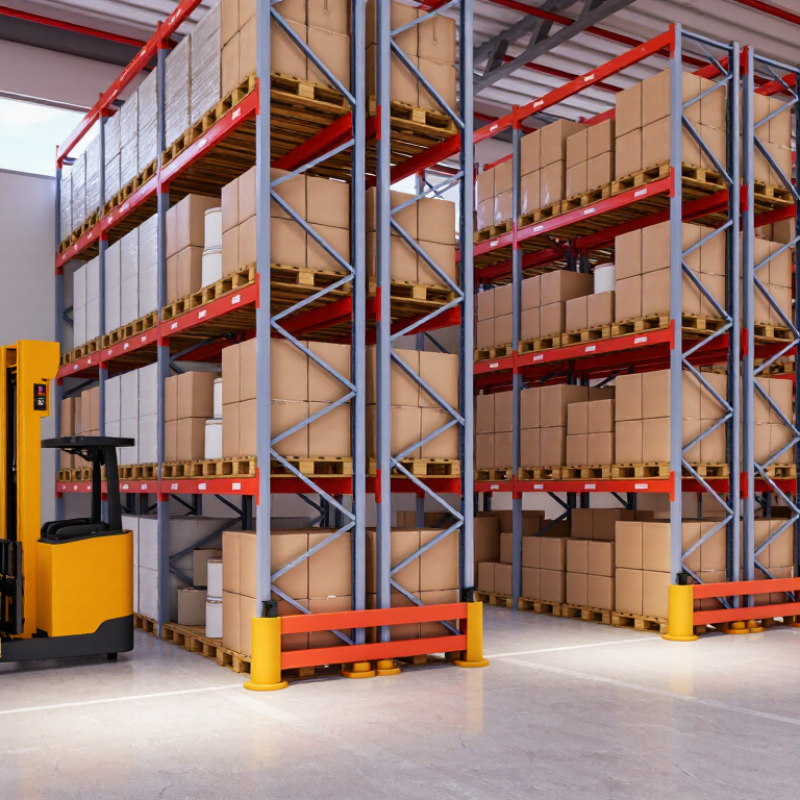
Identify the rack before discussing its capacity. A typical pallet rack has upright frames, horizontal beams, beam connectors, and bracing. Baseplates transfer forces to the floor, while anchors help resist movement. Wire decking or pallet supports may also affect how a load sits. Small details matter. A bent beam connector or missing brace can change the rack’s condition, even when the parts look familiar.

Capacity labels use terms that are easy to mix up. Beam capacity usually describes the allowable load on one beam level, often across a pair of beams. Frame capacity refers to the load an upright frame can support under specified conditions. Bay capacity concerns the combined loads in a rack section, but it is not always a simple sum of beam ratings.

Loads should be placed and distributed as the rating requires; concentrated weight can behave differently from an even load. Check the rack’s posted ratings and manufacturer documentation for the exact configuration. Labels can fade. If a rating or component is uncertain, pause and verify it with a qualified rack professional rather than estimating.

I have seen capacity discussions focus on numbers while overlooking the actual beam length, frame height, or load placement. That part deserves a second look.

Measure Beam Length, Frame Height, and Rack Depth

How to Calculate Heavy Duty Pallet Rack Capacity 5 Best Tips

Start with three measurements: beam length, frame height, and rack depth. Measure the clear beam span between uprights, then record each frame’s overall height and front-to-back depth. Use a tape measure and note units consistently. Small errors matter. Beam capacity usually applies to a specified beam pair and an evenly distributed load, not any load arrangement. Check the rack’s load chart or documentation before estimating capacity.

Tips: Measure several bays, not just one. Confirm beam lengths and frame heights match across the run. Measure depth from the front upright to the rear upright, then compare it with pallet dimensions. A pallet should sit securely, with suitable support and no unintended overhang. Check twice.

These dimensions help identify the rack configuration, but they do not establish a safe capacity by themselves. Upright capacity can change with frame height, beam elevation, bracing, and installation conditions. A familiar-looking rack may have different components or spacing. It is tempting to rely on a simple size-based formula, but that can miss important details. Verify the rack’s rated capacities and account for the actual load weight and distribution; seek a qualified rack professional if ratings are missing or the setup has changed.

Determine Pallet Weight and Load Distribution

A reliable capacity check starts with the actual pallet, not its product label. Weigh a fully packed pallet, including the pallet itself, wrap, and any dunnage. For example, 48 cartons at 18 kg each weigh 864 kg before packaging. Add the pallet and packaging weight to find the true unit load. Repeat for different products; one heavy pallet can change the required beam capacity.

Load position matters. A centered, evenly supported pallet spreads force across the beam pair; an overhanging or uneven load can concentrate force near one end. ANSI MH16.1 rack-design guidance makes capacity dependent on the rack configuration and stated loading conditions, so compare the actual setup with its posted rating. OSHA 29 CFR 1910.176(b) also requires stored materials to remain stable against sliding or collapse. Do not assume a rating applies when beam lengths, frame heights, or connections differ.

Tip: Record each pallet’s gross weight and loading pattern. Mark uneven or concentrated loads for a separate review. Small differences add up. I’ve seen teams rely on a product’s “standard pallet” estimate; it is convenient, but often not accurate enough. Confirm the beam rating and frame capacity with a qualified rack professional before changing the load.

Calculate Beam, Upright Frame, and Bay Capacity

Start with the beam pair, not a single beam. Record the clear span, connector type, and actual load per level, including pallets and attachments. If two pallets weigh 2,400 pounds each, the beam pair carries 4,800 pounds on that level. Keep the load evenly distributed; concentrated loads can change the result. Check the manufacturer’s capacity chart for the exact beam and span. Close enough is not enough.

Next, check the upright frame rating. RMI’s ANSI MH16.1-2023 standard makes rack capacity dependent on the system’s design and configuration, including beam elevations and frame details. Measure the distance between beam levels, then verify the frame’s rated capacity for that arrangement. A taller first beam level can reduce capacity. Small detail, big effect. I still see estimates use a frame rating from a different layout.

For bay capacity, add the loads on every occupied beam level, then compare that total with the allowable frame capacity and beam limits. For example, three levels carrying 4,800 pounds each create 14,400 pounds of stored load per bay. That total is only a screening calculation: load sharing, bracing, anchorage, and uneven placement matter. OSHA’s Warehousing eTool also advises keeping loads within rack capacity and posting limits where workers can see them. Record the rack dimensions and load assumptions; if the layout or condition is uncertain, have a qualified rack professional verify it.

Apply Safety Limits and Check Manufacturer Ratings

Heavy-duty pallet rack capacity is not a single number. Check the manufacturer’s load chart for the exact beam length, upright frame, and connection style in your installation. A rating for one configuration may not apply to another. Keep the chart near the rack, where staff can compare it with the actual setup.

Read the limits carefully. Beam capacity usually assumes an evenly distributed load, not a heavy pallet edge resting near the center. Follow the stated per-beam and per-bay limits, and include the weight of pallets and containers. Leave a safety margin; do not treat the maximum rating as a daily target. Small details matter.

Check the floor, anchors, and frame condition, too. A bent upright, loose anchor, or altered beam can make a published rating unreliable. After a layout change, ask the manufacturer or a qualified rack professional to confirm the capacity. I used to think a clear load label was enough. It isn’t. Inspect regularly, replace missing signs, and keep damaged areas unloaded until they are assessed.

How to Calculate Heavy Duty Pallet Rack Capacity 5 Best Tips - Apply Safety Limits and Check Manufacturer Ratings
Tip What to Check or Calculate Illustrative Example Safety Limit and Verification
1. Weigh the complete pallet load Include the goods, pallet, packaging, and any attachments. Use the maximum expected load, not only the average load. Goods: 1,800 lb; pallet and packaging: 100 lb. Total load placed on the rack: 1,900 lb per pallet. Confirm that the actual load does not exceed the pallet, beam, or rack-system limits. Do not estimate weight when reliable records or weighing are available.
2. Calculate the load on each beam level Add the weights of all pallets supported by one beam level. Check that the load arrangement matches the rack’s rated loading conditions. Two pallets at 1,900 lb each create a 3,800 lb total load on that beam level. Compare the total with the posted or manufacturer-rated capacity for the specific beam pair and span. Do not treat a bay’s total capacity as the capacity of one beam level.
3. Check the upright frame and whole bay Account for the loads transferred through the frames at every loaded level. Frame capacity depends on rack configuration and loading conditions. If three levels each carry 3,800 lb, the stored load in the bay is 11,400 lb, before considering any other loads or configuration effects. This arithmetic is not a frame-capacity rating. Verify the frame rating for the actual beam elevations, frame depth, bracing, anchorage, and installation conditions.
4. Check load placement and distribution Confirm pallet size, support points, load centering, and whether the load is evenly distributed or concentrated. A 1,900 lb pallet placed centrally and supported as intended is different from a load with the same weight concentrated at one edge. Use only compatible pallets and approved support arrangements. Do not assume a uniformly distributed-load rating applies to an off-center or concentrated load.
5. Apply ratings and maintain a safety margin Use the lowest applicable verified limit for the beam level, frame, connectors, accessories, and complete rack configuration. If the verified beam-level rating is 4,000 lb, a 3,800 lb load is within that stated rating only if the rating applies to the exact configuration and loading pattern. Never increase a rating by applying an assumed safety factor. Follow the manufacturer’s ratings and applicable local requirements; have changes or uncertain conditions reviewed by a qualified rack professional.
Important: The figures above are illustrative calculations, not equipment ratings or approval for use. Actual capacity varies with the rack’s make, components, dimensions, condition, installation, and load pattern. Obtain the applicable manufacturer documentation, display required load information, and remove damaged or altered components from service until assessed.

FAQS

Which rack measurements should I record?

Measure the clear beam span, frame height, and front-to-back rack depth. Use the same units throughout. Check several bays.

Do rack dimensions tell me the safe capacity?

No. Dimensions identify the setup, but capacity also depends on beams, frames, bracing, and installation conditions. Check the rack’s specific load chart.

How do I find a pallet’s actual weight?

Weigh the fully packed pallet, including packaging, wrap, and dunnage. For example, 48 cartons weighing 18 kg each total 864 kg before those extras.

Why does load position matter?

A centered, evenly supported pallet spreads weight across the beam pair. An overhanging pallet can concentrate force near one end. Small shifts matter.

Can one beam rating apply to every rack bay?

Not necessarily. Beam length, frame height, and connection style can differ. Compare the actual setup with its posted rating.

What should I check before using a pallet rack?

Inspect the floor, anchors, frames, and beams. Keep damaged areas unloaded until they have been assessed. Look closely.

Should I load the rack up to its maximum rating each day?

No. Include pallets and containers in the load weight, and leave a safety margin. A maximum is not a daily target.

What if the load chart is missing or the layout changed?

Ask a qualified rack professional to confirm capacity before changing the load. I used to trust a clear label alone. That was too simple.

Conclusion

Learning how to calculate heavy duty pallet rack capacity starts with identifying the rack’s main components and understanding the difference between beam, upright frame, and full-bay capacity. Measure the beam length, frame height, and rack depth accurately, then determine the weight of each pallet and how its load is distributed across the beams. These details provide the basic information needed to assess whether the rack configuration can support the intended storage load.

Calculate each capacity separately rather than relying on a single estimate: beam capacity depends on the load placed across a pair of beams, while frame capacity relates to the vertical load carried by the uprights. The total bay capacity must account for all loaded levels and the limits of its components. Use appropriate safety margins, avoid exceeding the lowest applicable rating, and check the manufacturer’s capacity information for the specific rack configuration before use.

Mason

Mason

Mason is a seasoned marketing professional with a deep expertise in the company's offerings and a passion for driving brand awareness. With a strong background in digital marketing strategies, he has an innate ability to connect with diverse audiences and effectively communicate product benefits.......