How to Calculate Warehouse Rack Load Distribution?

Time:2026-09-22 Author:Liam
0%

Warehouse rack safety begins with one practical question: how to calculate warehouse rack load distribution accurately. The answer is not found by dividing total inventory weight by the number of beams. Each pallet position, beam level, upright frame, connector, and floor contact transfers force differently. A 1,000-kilogram pallet placed near a frame may create another stress pattern than the same pallet positioned at mid-span.

Kevin R. Gue, Ph.D., a recognized warehouse design researcher, offers a useful principle: “Good warehouse design balances capacity, safety, and operational flow.” That balance matters when checking rack loads. Begin by recording each pallet’s actual weight, dimensions, and storage height. Then identify beam capacity, frame capacity, bay configuration, and the manufacturer’s stated load limits. Keep heavier pallets on lower levels when the design permits it. Check whether loads are centered, evenly supported, and compatible with the pallet type. Small gaps can matter. Bent uprights matter more.

The calculation should also consider dynamic forces from forklifts, uneven floors, damaged components, and accidental impact. Static numbers can look reassuring. Real warehouses are less tidy. Some assumptions may be wrong, especially when old drawings or incomplete inventory records are used. Recheck measurements on site. Compare calculations with the rack supplier’s engineering data, and request a competent structural review when capacities are unclear.

This guide explains the process step by step, including load grouping, bay-level distribution, safety checks, and common calculation mistakes. It does not replace a site-specific engineering assessment. When doubt remains, reduce the load and isolate the affected bay. Safety deserves a conservative answer.
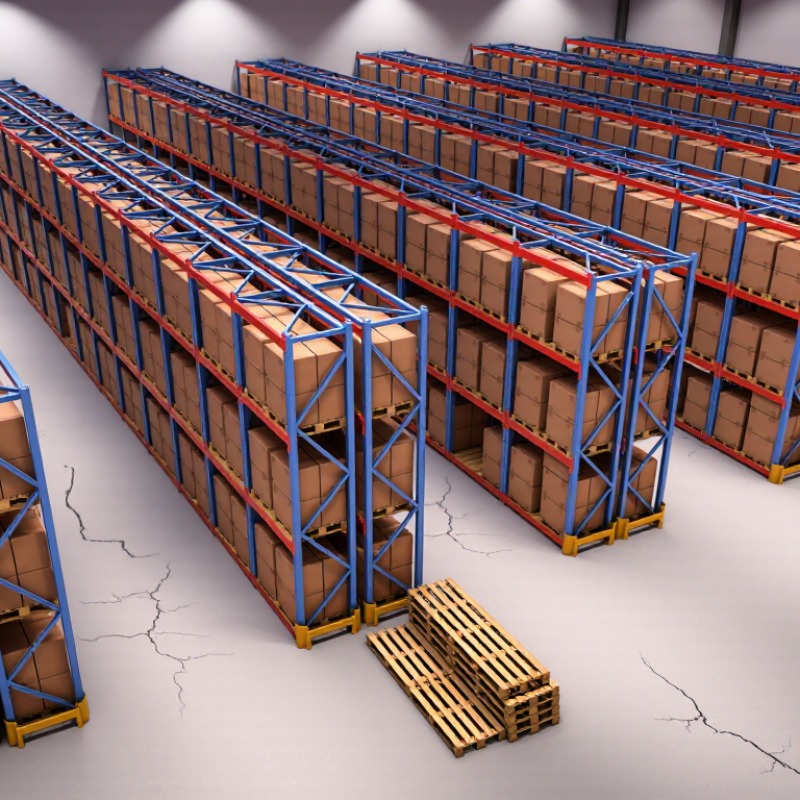
How to Calculate Warehouse Rack Load Distribution?

Define Rack Load Terms, Components, and Distribution Goals

How to Calculate Warehouse Rack Load Distribution?

Rack load distribution begins with clear terms. A unit load is the weight of one pallet and its goods. Bay load means the combined weight stored between two uprights. Beam load is the weight supported by one horizontal beam level. Upright load is the force transferred downward through the frames. Dead load includes the rack structure itself. Point loads can occur when pallets sit unevenly or have damaged boards.

The main components are pallets, beams, uprights, braces, anchors, and the warehouse floor. Each part affects how weight travels.

A practical calculation records pallet weight, beam spacing, storage levels, and the number of bays. Then, divide the stored weight between supporting beams, while checking the manufacturer’s rated capacities and local engineering requirements. Loads should remain below rated limits, with an appropriate safety margin.

The distribution goal is stable, balanced support. Heavy pallets usually belong on lower levels. The center of gravity should stay within the rack’s supported footprint. Inspect beam deflection, upright alignment, anchor condition, and floor cracks. Small details matter.

A neat spreadsheet can still be wrong.

I have seen calculations fail because an empty pallet was ignored, or because real pallet positions differed from the drawing. Recheck measurements during a physical inspection. When unusual loads, seismic conditions, or damaged components appear, a qualified structural professional should review the arrangement before use.

Gather Rack Dimensions, Material Data, and Stored Load Information

How to Calculate Warehouse Rack Load Distribution?

Accurate rack load distribution begins with measured facts, not assumptions. Record upright height, frame depth, beam span, level spacing, and base-plate locations. Check plumbness too. Small deviations can change force paths. Measure each bay when possible, because warehouse drawings may be outdated.

Material data matters. Identify steel grade, thickness, section shape, connection type, and visible corrosion or impact damage. Note verified beam deflection limits and upright capacities. If data is missing, do not invent it. That mistake can weaken the entire calculation. Stored load information must be equally specific. Record each pallet’s mass, footprint, support points, overhang, and center of gravity. Include packaging and uneven contents. A 900-kilogram pallet is not always a uniform 900-kilogram load.

For a centered pallet supported by two beams, an initial estimate may divide the weight between both beams. Real distribution changes with stiffness, pallet condition, gaps, and load position. Calculate reactions using static equilibrium, then check beam bending, shear, upright compression, and frame buckling. Include handling impact where appropriate. I have seen small placement errors create surprisingly uneven reactions. That deserves a second check. Compare calculated loads with verified capacity documents and actual site conditions. A qualified structural engineer should review unusual loads, damaged members, seismic conditions, or missing records before storage begins.

Calculate Load per Pallet Position and Beam Level

How to Calculate Warehouse Rack Load Distribution?

Calculate the load per pallet position before checking the beam level. Weigh the product, pallet, packaging, and any load accessories. For example, a 750 kg product on a 25 kg pallet creates a 775 kg pallet-position load. Four positions therefore place 3,100 kg on one beam level. Do not divide 775 kg between two beams; both beams share the pallet, but the rack level still carries the full pallet mass. Check whether the load is centered, offset, or concentrated. Uneven placement can increase stress on one beam connector and reduce practical capacity.

Compare the calculated load with the rack’s approved beam and upright ratings. EN 15635 requires visible load information and safe operating controls for adjustable pallet racking. The 2024 Material Handling Institute Annual Industry Report also found that 83% of supply-chain professionals expect greater technology adoption, supporting digital load registers and inspection records. Use them, but verify every entry manually. Data can be wrong.

Allow for real warehouse conditions. Forklift impacts, damaged pallets, missing deck boards, and irregular cartons can change load distribution. The U.S. Bureau of Labor Statistics reported a 4.8 injury-and-illness incidence rate per 100 full-time workers in transportation and warehousing during 2023. That figure is not a rack-capacity limit, but it reinforces the need for disciplined checks. A structural engineer should confirm unusual loads, seismic demands, or altered rack layouts. Real warehouses are rarely perfect. That is the part worth questioning.

Check Upright, Beam, and Floor Capacity Against Applied Loads

Warehouse rack load distribution starts with the applied load, not the rack label. Record pallet weight, dimensions, placement, and storage levels. A 1,000-kilogram pallet centered on two beams does not create identical forces in every component. Uneven loading shifts demand toward one upright frame. Measure it on site.

Check beam capacity using the clear span, beam section, connection condition, and load pattern. Compare bending moment and deflection with limits set by a qualified structural engineer. Then check each upright for compression, bracing condition, frame height, and impact damage. Upright capacity can fall sharply when frames are out of plumb or bracing is missing. Do not treat a beam rating as a complete system rating. The weakest connection may govern.

Floor capacity needs a separate check. Convert rack reactions into point loads, then compare them with slab capacity, thickness, reinforcement, joints, and subgrade condition. Inspect cracked concrete, settlement, and anchor performance. A simple distribution assumption may be convenient, but it can be wrong near corners, damaged frames, or partially loaded bays. Use measured reactions where possible, and document every assumption. A neat calculation is not proof of safety. Have a competent engineer review unusual layouts, changes in use, and results close to capacity.

Adjust the Layout for Balanced Loads and Safe Weight Distribution

Warehouse rack load distribution starts with the layout, not the forklift. Record each pallet’s weight, dimensions, and center of gravity before assigning a position. Calculate each level’s demand by adding pallet, container, and accessory weights. Compare that demand with beam and upright capacities on the approved load schedule. Never treat a maximum bay rating as permission to load every level equally. Capacity also depends on beam spacing, frame height, connections, and floor conditions. A tidy drawing can still fail in practice.

Place the heaviest stable pallets on lower levels, especially where picking creates vibration or impact. Keep left and right positions reasonably balanced. Do not shift weight toward one upright. Leave clearances for pallet entry and beam deflection. Center the load whenever possible. Avoid unsupported overhang unless the rack design permits it. Use floor markings and visible load notices to prevent substitutions during busy shifts. The HSE guidance HSG76 recommends regular rack inspections and expert examinations at intervals not exceeding twelve months.

For a long rack run, model the heaviest realistic inventory mix, not average stock. Test a worst-case bay with full pallets, uneven placement, and forklift impact assumptions. The U.S. Bureau of Labor Statistics recorded 5,283 fatal workplace injuries in 2023, showing why small control failures deserve attention. When products, pallet sizes, or storage levels change, recalculate the layout. Do not rely on memory. The awkward question is whether the current arrangement was ever checked under real operating conditions.

FAQS

What does “unit load” mean in warehouse racking?

A unit load is one pallet, its goods, packaging, and accessories. For example, 750 kilograms of goods plus a 25-kilogram pallet equals 775 kilograms. Small items count too.

How do I calculate the load on one beam level?

Multiply the load per pallet position by the number of positions. Four pallets weighing 775 kilograms each create 3,100 kilograms on that level. Do not halve the total because two beams support each pallet.

Which parts affect rack load distribution?

Pallets, beams, uprights, braces, anchors, and the floor all affect load movement. A weak connection can control the whole system. The label is not enough.

Where should heavier pallets be stored?

Place heavier pallets on lower levels whenever the rack design allows it. Keep the center of gravity inside the rack’s supported footprint. A tilted pallet is a warning.

How should uneven pallet placement be handled?

Record whether each pallet is centered, offset, or concentrated on one side. Uneven placement can increase force on one beam connector or upright. Measure the real position.

How do I check beam and upright capacity?

Compare applied loads with approved beam and upright ratings. Also review beam span, connections, frame height, bracing, and impact damage. One rating cannot describe the entire rack.

Why does floor capacity need a separate calculation?

Rack reactions create point loads on the concrete floor. Check slab thickness, reinforcement, joints, settlement, cracks, and anchor performance. Concrete can look strong while carrying poorly.

Can a spreadsheet prove that a rack is safe?

No. A spreadsheet can contain wrong weights, missing pallets, or outdated layouts. Recheck measurements during a physical inspection. When damage, unusual loads, seismic conditions, or near-limit results appear, consult a qualified structural professional. The neat answer may still be wrong.

Conclusion

Learning how to calculate warehouse rack load distribution begins with understanding key terms such as pallet position, beam level, upright capacity, and allowable floor load. Start by collecting accurate rack dimensions, component specifications, material properties, pallet weights, and the number of stored loads. Then determine the load applied to each pallet position and calculate how that weight is shared across each beam level and upright frame. Consider both evenly distributed and concentrated loads, since pallet placement can significantly affect structural stress.

Next, compare the calculated loads with the rated capacities of the beams, uprights, connections, and warehouse floor. Safety factors should be included to account for handling conditions and possible load variation. If the distribution is unbalanced, adjust pallet locations, storage heights, or rack spacing to improve stability and reduce excessive stress in individual components. A careful, measurement-based approach to how to calculate warehouse rack load distribution helps support safer operations, better space utilization, and more reliable warehouse planning.

Liam

Liam

Liam is a dedicated marketing professional with a profound expertise in the industry, where he excels at highlighting the unique advantages of our core products. With a keen understanding of market trends and consumer needs, Liam frequently updates our company’s professional blog, providing......