Why Do Racks Rust in Cold Storage and How to Prevent It?

Time:2026-11-06 Author:Mason
0%

Cold storage protects products, but it can expose rack steel to a difficult cycle: cold surfaces, humid air, and condensation. The Global Cold Chain Alliance’s 2020 Global Cold Storage Capacity Report estimated worldwide cold-storage capacity at about 719 million cubic metres. That scale makes rack durability more than a maintenance detail. It affects safe operations, inventory access, and long-term facility costs.

ASHRAE’s Handbook—Refrigeration provides technical guidance on refrigerated environments, while corrosion engineer Pierre R. Roberge’s Handbook of Corrosion Engineering explains how material condition and exposure influence corrosion. Roberge’s work supports a practical takeaway: manage the environment at the steel surface, not just the room temperature. This is a paraphrase, not a verified direct quotation. Small gaps count. Damaged coatings, wet floor-level areas, and condensation around evaporator zones can all deserve closer inspection. The precise risks vary by building.

This introduction examines why corrosion develops and how to prevent rust on warehouse racks in cold storage. It looks at moisture control, coating selection, cleaning practices, and inspection routines. No single fix suits every facility. A coating that performs well in one temperature and washdown schedule may fail under another. That detail is easy to overlook. The goal is a practical, evidence-aware approach, with clear limits and maintenance steps that operators can check on the floor.
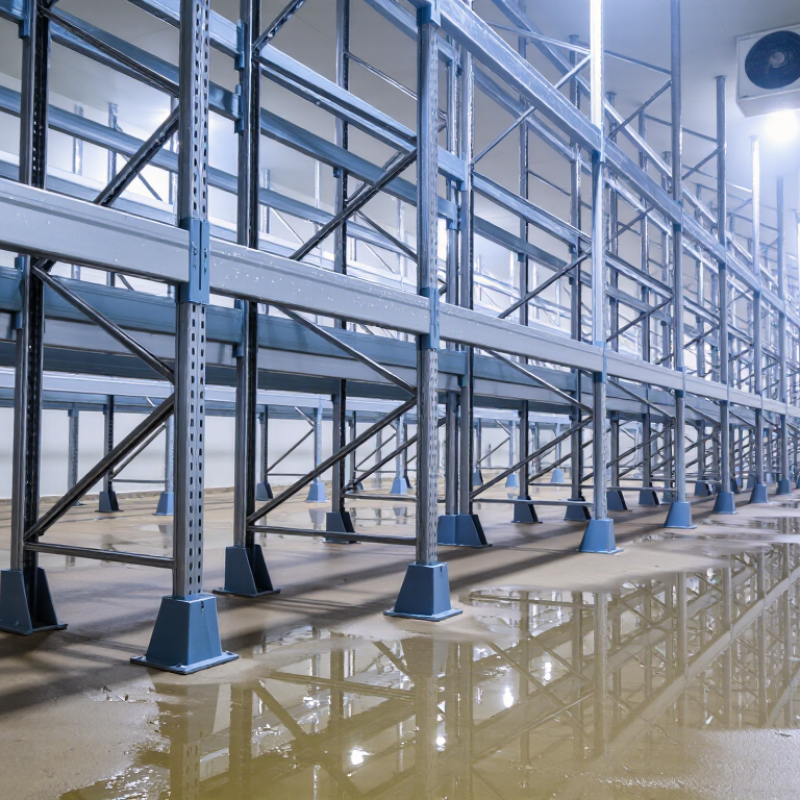
Why Do Racks Rust in Cold Storage and How to Prevent It?

What Causes Metal Racks to Rust in Cold Storage?

What Causes Metal Racks to Rust in Cold Storage?

Cold itself does not rust steel. Moisture does the damage. When warm, humid air enters a cold room, water can condense on cooler rack beams, welds, and fasteners. These wet patches may be hard to spot, especially behind stored cartons. Repeated washdowns, slow drying, and scratches in protective coatings keep metal exposed to water and oxygen. Salt or cleaning-chemical residue can speed corrosion. Cold alone is not the culprit.

NACE International’s 2016 IMPACT study estimated global corrosion costs at US$2.5 trillion annually, or about 3.4% of global GDP. That figure covers many industries; it is not a cold-storage rack estimate. Still, it shows why small maintenance failures deserve attention. A rack may look sound while rust starts under a chipped coating or around a damp joint. I’d avoid assuming a quick visual check tells the whole story.

Tips: Check welds, beam ends, and floor-level uprights for orange staining or blistered paint. After cleaning, allow surfaces to dry fully and repair coating damage with a compatible protective system. Keep airflow clear around rack rows, and investigate recurring condensation rather than simply wiping it away. Dry storage helps.

How Temperature Changes and Condensation Accelerate Corrosion

Cold storage does not stop steel from rusting. The real problem is often repeated temperature change. When warm, humid air enters through an open door, it can meet rack steel that is still cold. If the steel surface is below the air’s dew point, moisture forms on it. You may see droplets on beams, but condensation also collects inside joints and around bolts.

That thin water film gives oxygen and contaminants a path to the metal. Repeated wetting and drying can gradually damage exposed steel, especially where a coating is scratched or chipped. Defrost cycles and washdowns can add moisture, too. Small details matter. Water trapped beneath a beam connection may stay there long after nearby surfaces look dry.

Reduce humid air entering the room by keeping doors closed and maintaining suitable seals. Check ventilation and defrost practices with a qualified refrigeration technician; settings vary by facility. After cleaning, remove standing water where practical, and avoid leaving damp packaging against rack uprights. Inspect welds, fasteners, column bases, and impact-damaged coating on a regular schedule. Repair coating damage with a system suitable for the room’s temperature and cleaning conditions. No coating is permanent. Keep records of recurring damp spots; they can reveal a door, drainage, or airflow problem that a quick visual check misses.

Why Do Racks Rust in Cold Storage and How to Prevent It? - How Temperature Changes and Condensation Accelerate Corrosion

Cold-Storage Condition What Happens to the Rack Relative Corrosion Risk Practical Prevention What to Inspect
Warm, humid air enters a colder room If warm air contacts rack surfaces below its dew point, moisture can condense on the steel. Persistent surface moisture supports corrosion. High when condensation is frequent or slow to dry Limit unnecessary door openings; maintain door seals and air curtains where appropriate; manage indoor humidity and ventilation. Water droplets, damp uprights, and repeated wetting near doors or transfer areas
Repeated temperature changes around the dew point Moisture may repeatedly form and evaporate. These wet-and-dry cycles can leave corrosion-promoting deposits behind. Moderate to high, depending on moisture and exposure duration Reduce abrupt temperature swings; keep airflow unobstructed so surfaces can dry; investigate recurring condensation sources. Rust that returns in the same locations after cleaning or drying
Frost or ice accumulates and later melts Melting ice leaves liquid water on or around rack components. Water trapped at joints or base plates can remain in contact with steel. Moderate; higher where drainage or drying is poor Use safe defrosting practices; remove standing water; keep drains clear and avoid directing wash water toward rack bases. Rust at floor-level feet, connection points, and areas beneath stored goods
Washdown water or cleaning chemicals remain on surfaces Prolonged wetness encourages corrosion. Chloride-containing residues can make moisture more conductive and may accelerate attack on susceptible metals. High when residues or pooled water remain Use cleaning agents suitable for the rack material and coating; rinse when required by the product instructions; dry surfaces and remove residues. Residue, discoloration, coating changes, or corrosion around seams and fasteners
Coating is scratched or damaged Exposed steel is less protected from moisture and oxygen. Impact damage can create local corrosion sites, especially in persistently damp areas. Moderate; higher in wet or contaminated locations Prevent forklift impacts; use a compatible repair coating according to its application instructions; replace components if damage affects structural integrity. Chipped paint, worn galvanizing, impact marks, or rust spreading from a damaged area
Condensation occurs at rack joints, hollow sections, or poorly ventilated spaces Moisture can be retained in crevices or enclosed spaces, making drying difficult and allowing corrosion to progress unnoticed. High where moisture is trapped Choose rack designs and finishes suited to the environment; avoid trapping water during installation; maintain airflow and inspect hard-to-see areas. Rust at joints, welds, overlaps, enclosed sections, and other locations that are difficult to dry
Routine operation in a consistently cold, dry environment Low temperature alone does not cause rust. Corrosion risk is generally lower when the rack stays dry and its protective finish remains intact. Low while surfaces remain dry and undamaged Maintain stable environmental conditions, prevent water entry, and keep protective coatings in good condition. Changes in humidity, new leaks, surface damage, or early signs of corrosion

Key point: Temperature changes can cause condensation when a rack surface falls below the dew point of the surrounding air. Keeping racks dry, limiting contamination, protecting damaged finishes, and inspecting regularly are central to corrosion prevention.

Which Rack Materials and Coatings Resist Rust?

Which rack materials and coatings resist rust?

For cold storage, choose materials around the actual wetting pattern, not temperature alone. Stainless steel resists corrosion without a separate coating; grade 316 is often preferable where salty wash water or chlorides are present. For standard carbon-steel racks, hot-dip galvanizing provides a zinc layer that corrodes before the steel.

ISO 9223:2012 classifies first-year zinc loss at 0.1–0.7 micrometres in C2 environments and 0.7–2.1 micrometres in C3 environments. These are atmospheric corrosion rates, not guarantees for a washed-down freezer. Small details matter.

Powder-coated or epoxy-coated steel can work in dry, well-maintained rooms, but impact damage at beam edges, welds, or floor-level posts can expose bare steel. Not forever. Specify coating coverage on cut edges and joints, and inspect those spots after installation.

Where frequent condensation or washdown is unavoidable, galvanized steel or suitable stainless steel is usually a safer choice. A practical check: look for water collecting beneath pallets and at column bases after defrost cycles. If it stays there, even a robust coating may need more frequent inspection.

I would not treat “food-grade” as a corrosion rating; confirm the alloy, coating specification, and cleaning conditions instead.

How to Prevent Rust Through Design and Installation

Cold-storage racks often rust at cut edges, welds, base plates, and places where condensation sits. Defrost cycles can wet steel, then leave it cold and damp again. Cleaning chemicals may also attack a coating not selected for that environment. Specify a finish compatible with low temperatures, washdown routines, and the actual chemicals used onsite.

AMPP’s 2016 IMPACT study estimated global corrosion costs at US$2.5 trillion annually, or 3.4% of global GDP. It also estimated that applying corrosion-control practices could save 15–35% of those costs. This is a broad industry estimate, not a rack-specific forecast.

Good design removes places where water can linger. Use smooth joints, drainable base details, and protected cut edges; avoid hollow sections that can trap moisture. Set rack feet clear of standing water where practical, and check that floor slopes do not direct meltwater toward uprights.

Small details matter. During installation, avoid dragging beams across coated surfaces, and repair scratches or field cuts with a compatible coating system. Keep dissimilar metals from direct contact when moisture is present.

After installation, inspect welds, anchors, and lower uprights, especially after the first defrost season. A simple photo log helps reveal recurring wet spots. It is easy to specify a durable finish and still miss one poorly drained corner.

How to Inspect, Maintain, and Repair Cold Storage Racks

Cold-storage racks often rust where warm, moist air meets chilled steel: upright bases, beam connectors, floor anchors, and chipped coatings. Defrost cycles can leave water behind, while cleaning residues may speed corrosion. Small signs matter. During routine walk-throughs, look for orange streaks, blistered paint, standing water, loose anchors, bent members, and impact marks. Record locations and photograph changes; a clean-looking surface does not prove the steel beneath is sound.

NACE’s 2013 IMPACT study estimated corrosion costs at US$2.5 trillion annually, or about 3.4% of global GDP. This is an economy-wide estimate, not a rack-specific figure, but it shows why preventive maintenance matters. Keep inspection records, note temperature and humidity changes, and check racks after impacts or unusual condensation. Have a qualified rack inspector assess structural damage. Restrict access to affected bays, and unload or repair them only under a competent person’s direction. Do not simply cover rust with paint.

Tips: Dry wet areas promptly and restore damaged protective coatings using a compatible system. Keep drains clear, and inspect anchors where wash water collects. Photograph every change. A checklist can still miss hidden corrosion, so review it after each season and adjust it to what your site actually finds.

FAQS

Does cold air alone cause metal racks to rust?

No. Moisture is the main cause. Warm, humid air can condense on cold beams, welds, and bolts. Cold steel, wet surface.

Where does condensation collect on a rack?

Check beam connections, welds, fasteners, and column bases. Water can hide beneath joints or behind cartons, even when nearby steel looks dry.

How can temperature changes increase corrosion?

When warm air enters, cold rack surfaces may fall below the air’s dew point. Droplets form. Repeated wetting and drying can expose damaged steel.

Which rack materials handle damp conditions better?

Stainless steel resists corrosion without a separate coating. Grade 316 may suit areas exposed to salty wash water. Hot-dip galvanized steel is another option.

Are painted or coated racks enough for cold storage?

They can work in dry, well-maintained rooms. Scratches at beam edges or floor-level posts expose bare steel. No coating lasts forever.

What should staff inspect after cleaning or defrosting?

Look for orange stains, blistered paint, standing water, and damp packaging near uprights. Let surfaces dry fully. Small checks matter.

How can a facility reduce moisture around racks?

Keep doors closed and seals in good condition. Maintain clear airflow, remove standing water where practical, and review recurring condensation with a qualified refrigeration technician.

Does wiping away visible water solve the problem?

Not always. Water may remain inside joints or beneath connections. Record recurring damp spots; they may point to drainage or airflow trouble. I might miss one on a quick walk-through.

Conclusion

Cold storage racks are especially vulnerable to rust because moisture, low temperatures, and repeated temperature changes can cause condensation to form on metal surfaces. Scratches, damaged finishes, poor drainage, and prolonged exposure to damp air can further speed up corrosion. Understanding these conditions helps facility operators choose suitable rack materials and protective coatings, while accounting for the demands of refrigerated and freezer environments.

This article explains how to prevent rust on warehouse racks in cold storage through practical design, installation, and maintenance choices. It covers selecting corrosion-resistant materials and coatings, improving airflow and drainage, and reducing moisture exposure around racks. It also outlines routine inspection practices for spotting early rust or coating damage, along with appropriate cleaning, repairs, and protective touch-ups to help preserve rack safety and service life.

Mason

Mason

Mason is a seasoned marketing professional with a deep expertise in the company's offerings and a passion for driving brand awareness. With a strong background in digital marketing strategies, he has an innate ability to connect with diverse audiences and effectively communicate product benefits.......