A cantilever rack can look simple: a steel column, a base, and arms holding timber, pipe, or sheet goods. Yet a small change in arm angle can affect how a load sits, where forces travel, and whether products stay securely supported. So, why do cantilever racks need specific arm angles? The answer depends on the rack design, the load’s shape, and the conditions of use—not on appearance alone.
The U.S. Bureau of Labor Statistics reported a 4.8 injury and illness rate per 100 full-time workers in transportation and warehousing for 2022, compared with 2.7 across private industry. These figures cover a broad sector, not rack failures specifically, but they underline why storage equipment deserves careful attention. ANSI MH16.1 provides engineering criteria for industrial steel storage racks; it does not replace a manufacturer’s instructions or a site-specific assessment. Those details matter. A long steel tube behaves differently from a boxed pallet, especially when contact is uneven or an arm is overloaded.
The right angle helps keep the intended load position consistent and supports predictable rack performance. But an angle alone cannot make a rack safe. Check the rated capacity, arm configuration, anchorage, and actual load dimensions. A practical inspection may reveal bent arms or products resting awkwardly. Sometimes the setup looks acceptable. That is not proof. The exact limits should come from the rack manufacturer or a qualified rack engineer, because real storage conditions rarely match a perfect diagram.
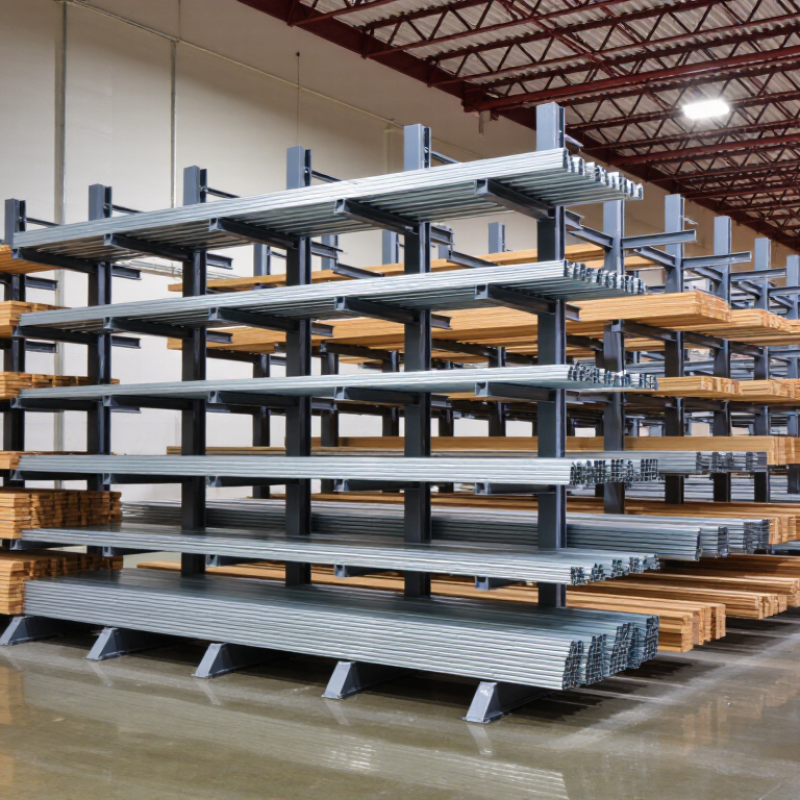
A cantilever rack arm angle describes the arm’s tilt relative to a level, horizontal line. It is not the angle between the arm and the upright column. Arms may be level or set to a specified upward or downward pitch, depending on the rack design and the materials being stored. Even a small change can affect how a load sits or whether it tends to move.
To check an angle, place a digital inclinometer or angle gauge on the arm’s straight, flat surface. Read the tilt against horizontal, and confirm whether the specification uses degrees from horizontal or another reference. That detail is easy to overlook. A reading of five degrees means something different if measured from the upright.
Measure unloaded arms where possible, since a heavy load can cause deflection and change the reading. Check several arms, especially after installation or adjustment. A worn, bent, or uneven surface can also produce misleading measurements. Field readings are not always perfect, so compare them with the rack’s installation documents and use the specified tolerance. Don’t assume every arm on a rack should have the same pitch; the intended setup depends on its design and use.
A cantilever arm’s angle affects where a load presses on the rack and how forces travel into the upright. If a long bundle rests near the arm tip, it creates more leverage than the same bundle placed close to the column. The upright and base must resist that bending force. Small changes matter.
Some arms are set with a slight upward tilt to allow for expected deflection under load. The exact angle depends on the rack design, load shape, and rated capacity; there is no universal setting. On a sloped arm, gravity also has a component along the surface. A suitable angle and approved retainers help keep stored material from shifting. A steep or inconsistent angle may concentrate contact at one point instead of spreading the load as intended.
In a warehouse, check that arms sit at matching angles and that the rack is level and properly installed. A floor that dips slightly can make one side carry more than the other. That detail is easy to miss. Use the rack’s engineering specifications when positioning arms, and ask a qualified rack professional to assess unusual or uneven loads. Don’t treat a changed angle as a harmless adjustment: it can alter both load distribution and forces on the structure.
| Arm angle above horizontal | Horizontal load reach (mm) | Axial force along arm (kN) | Shear force perpendicular to arm (kN) | Base bending moment (kN·m) | Structural effect |
|---|---|---|---|---|---|
| 0° | 1,000.0 | 0.000 | 4.905 | 4.905 | Maximum horizontal reach and bending moment in this example; no load component acts along the arm. |
| 2° | 999.4 | 0.171 | 4.902 | 4.902 | The upward angle slightly reduces the bending moment and introduces a small compressive force along the arm. |
| 5° | 996.2 | 0.428 | 4.886 | 4.886 | A modest angle can help resist outward movement of stored items, while increasing axial compression in the arm. |
| 10° | 984.8 | 0.852 | 4.830 | 4.830 | Bending moment is lower in this simplified case, but the larger axial force and steeper storage surface must be considered. |
Illustrative calculation: Each row assumes one 1,000 mm arm carrying a 500 kg vertical point load at its tip (approximately 4.905 kN), under static conditions. Horizontal reach = arm length × cos(angle); axial force = load × sin(angle); perpendicular shear = load × cos(angle); base bending moment = load × horizontal reach. Values are rounded.
Important: Arm angle alone does not determine how load is shared between rack arms or frames. Actual distribution depends on load placement, arm and frame stiffness, connections, bracing, and installation. Use the rack’s rated capacities and a qualified structural assessment for design and operation.
How Arm Angles Influence Clearance and Stored-Load Retention
An arm angle changes both the usable opening and the path a load may take. A slight upward pitch can encourage round stock to settle toward the upright. Too much pitch, however, may raise the outer contact point and reduce clearance for long bundles. Small differences matter. On a 36-inch arm, a 3-degree rise adds about 1.9 inches at the tip. That is a geometric example, not a universal rack setting.
Check clearance against the actual load envelope, including fork entry, sling access, overhang, and spacing between arms. ANSI MH16.3 addresses the design, testing, and use of steel cantilever racks. It does not prescribe one angle for every product. A qualified engineer should verify arm capacity, column loading, anchorage, and deflection for the selected configuration.
The U.S. Bureau of Labor Statistics reported a 2022 total-recordable-case rate of 4.8 per 100 full-time workers in warehousing and storage, compared with 2.7 across private industry. This is not an arm-angle study, but it highlights the importance of safe handling conditions.
Measure the tallest load, inspect end stops, and test retrieval with normal equipment. Review the setup after a trial placement. Real loads can behave differently. That uncertainty deserves attention.
A cantilever arm angle is a safety feature, not a visual preference. The specified angle helps keep stored material seated and directs its weight through the arms, columns, and base. If arms slope outward, round stock or bundled pipe may creep toward the tips. Too much upward slope can also shift contact points and change how loads bear on the arms. Small errors matter. The rack’s engineered drawings should set the angle for its intended loads; there is no single correct angle for every system. ANSI MH16.3 covers the design and use of cantilevered steel storage racks.
Incorrect angles can create hazards before a rack looks damaged. A load that rests unevenly may concentrate force on one arm, while repeated impacts during loading can loosen connections or deform components. A field adjustment with improvised shims is not a harmless fix. It can change the rack’s load path. The U.S. Bureau of Labor Statistics reported a 4.8 recordable-injury rate per 100 full-time-equivalent workers in warehousing and storage in its 2023 Survey of Occupational Injuries and Illnesses; this figure covers the industry, not cantilever racks alone. Still, it underscores why routine checks matter. Inspect arm angles against the original specifications, especially after impacts, repairs, or changes in stored material. A quick visual check can miss a subtle bend.
Choosing cantilever arm angles starts with the load, not a preferred rack layout. Long timber, pipe, and sheet bundles behave differently on supports. A slight upward angle can help limit outward movement for some loads, but it is not a restraint. Round stock may still roll, while uneven bundles can shift as a forklift sets them down. Use suitable stops or other approved restraints where needed.
Check the load’s shape, weight, length, and center of gravity. Confirm the rack’s rated capacity for the intended arm position and load distribution; capacity can change with configuration. Then consider operating conditions: forklift approach, available aisle space, picking frequency, and whether workers need clear access beneath the arms. Keep the load supported across the planned contact points. Watch for concentrated pressure at an arm tip.
Small details matter. A few degrees can change how a bundle sits and how easily it can be picked. Yet a neat drawing can still mislead; real loads are rarely perfectly uniform. Review the proposed angle with the rack supplier or a qualified engineer, and verify it with the actual load and handling method before regular use.
It measures the arm’s tilt against a horizontal line, not against the upright column. Arms may be level or pitched.
Place a digital inclinometer on the arm’s flat surface. Measure unloaded arms when possible. That detail gets missed.
A heavy load can bend an arm slightly and change its reading. Check several arms after installation or adjustment.
Yes. A 36-inch arm pitched upward three degrees rises about 1.9 inches at its tip. This is an example, not a universal setting.
A slight upward pitch may encourage stock to settle toward the upright. It is not a restraint. Round material can still roll.
Consider the load’s shape, weight, length, and center of gravity. Timber, pipe, and sheet bundles behave differently.
Check fork entry, sling access, load overhang, and spacing between arms. Test retrieval with the equipment used in daily work.
Compare measurements with the installation documents and specified tolerances. A qualified engineer should review capacity, loading, anchorage, and deflection.
Not always. Real bundles may be uneven, and a neat drawing can mislead. Try the actual load before regular use.
This article explains why do cantilever racks need specific arm angles by showing how an arm’s angle affects both support and storage. It describes what arm angles are and how they are measured, then explores how they influence load distribution and the forces carried by the rack structure. The angle also changes the usable clearance beneath each arm and can help keep stored materials properly positioned.
Choosing an unsuitable angle may concentrate forces, reduce load stability, or increase the risk of materials shifting or falling. The article outlines how to select an appropriate angle by considering the load’s size, shape, weight, and surface, along with the rack configuration and operating conditions. Matching arm angles to these factors helps support reliable storage and safer handling.

LogiSteel Racking